
Desk Movement Ideas for Office Workers
Organglow.ddd is a free educational website based in Southampton, UK. We publish practical guides on desk stretches, short breaks, and everyday workplace comfort — written for people who sit at a screen all day. We do not sell products, supplements, or treatments. No gym clothes required.
See the Exercises How to Take Better Breaks
Why Sitting All Day Makes You Feel Worn Out
Many people in the UK sit for more than nine hours a day — often without a proper break. Staying still for too long slows blood flow, tightens your hips, and makes it harder to focus by mid-afternoon. The good news? Even two minutes of movement can loosen things up and give you a bit more energy. You do not need a fancy standing desk or a wellness room. What actually works is doing small things regularly — the same way you check your inbox without thinking about it. Think of it like saving your work before a big edit: a few quick moves through the day keep your body comfortable and your head clearer when the deadlines pile up.
What We Actually Recommend
Everything here is designed for real office life — work clothes, a normal desk, and colleagues nearby. We know you have little space, meetings back to back, and no time to get out of breath before your next call. That is why our guides give you clear steps: how long to hold a stretch, when to breathe, and when to stop. These are gentle moves, not workouts — neck rolls, twists in your chair, wrist circles, and standing on your toes. They wake your body up without making you sweaty or out of breath.
- No equipment — just your chair, desk, and a bit of floor space
- Pick a routine based on time: 2, 5, or 10 minutes
- Plain instructions so you know you are doing it safely
- Simple tips to build the habit, including calendar reminders

Three Stretches You Can Try Right Now
These target the spots that take the most strain when you work at a screen all day.
Loosen Your Neck and Shoulders
Tilt your ear toward your shoulder and hold for 15 seconds on each side. Then gently tuck your chin in — this helps with that forward-head feeling from looking at a monitor. Roll your shoulders back ten times after a long typing session.
See the Full RoutineEase Tight Wrists and Forearms
Hold one arm out, palm up, and gently pull your fingers back with the other hand for 20 seconds. Flip your palm down and repeat. If your forearms feel tight by mid-afternoon from typing and mouse work, some people find this stretch useful.
See the Full RoutineWake Up Your Legs While Sitting
March your knees up and down for 30 seconds, then straighten one leg and hold for 10 seconds. Your legs do very little when you sit all day — these moves get them working again and help you stand up straighter.
See the Full RoutineWhy Short Breaks Actually Work
Some workplace wellbeing studies suggest that getting up every 30 to 60 minutes may support focus during a long sitting day. Some people use the Pomodoro method — 25 minutes of work, then five minutes off. Others prefer 52 minutes on, 17 minutes off. The pattern matters less than what you do on the break: actually move, not just open another browser tab. Stand up, walk to the kettle, or do a two-minute stretch. Many office workers report feeling more comfortable and organised when they return to their desk. Individual experiences vary.
How to Take Better Breaks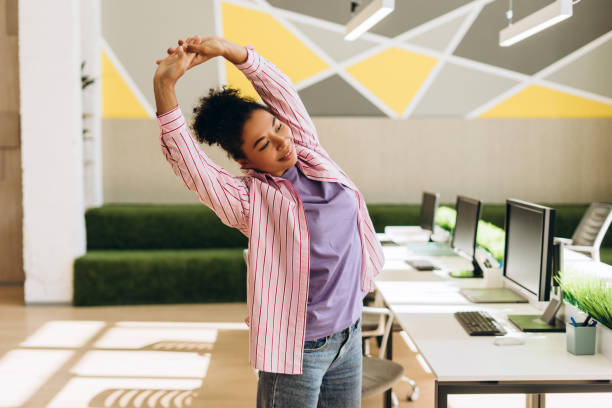
Moving More Helps You Get More Done
Light movement during the day is commonly associated with feeling more comfortable at a desk. A short stretch break may help some people feel more alert during a sitting-heavy day, without disrupting workflow. Moving can also mark a mental shift between tasks — one job ends, another begins. Try a two-minute walk when you switch projects. The aim here is everyday workplace comfort, not athletic training or specific health outcomes. What works for one person may not work for another.
- Start the morning: Spend five minutes stretching before you open your inbox. You will notice your posture sooner when it starts to slip.
- Mid-morning: After your first block of meetings, stand up, do ten calf raises, and twist your torso gently.
- At lunch: Walk outside for at least ten minutes if you can. Daylight helps you stay alert in the afternoon.
- Around 3 p.m.: When focus drops, march on the spot for 60 seconds and take a few deep breaths before your next task.
Quick Ways to Recharge at Your Desk
Stretches are not the only option. Box breathing is simple: breathe in for four counts, hold for four, out for four, hold for four. It helps you settle down after a stressful call. You can also tense and relax muscle groups one by one — feet, legs, stomach, hands, shoulders, face — right in your chair. Drink enough water: even mild dehydration can cause headaches and make it harder to concentrate, so keep a bottle on your desk and use refills as a reason to stand up. Sit near a window when you can — daylight helps you sleep better that night. And give your eyes a rest: every 20 minutes, look at something far away for 20 seconds. It cuts down on that tired, dry-eye feeling from screens.
More Ways to Recharge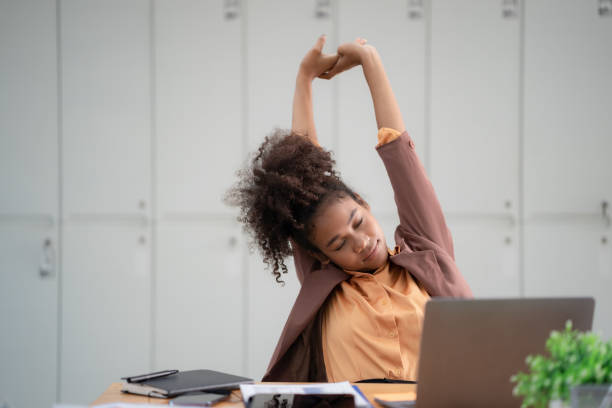
Questions People Often Ask
Real questions from office workers trying to fit movement into a packed day.
About Organglow.ddd
Transparent information about who operates this website.
We are a UK-based educational resource focused on desk movement, break habits, and everyday workplace comfort for office workers. Our content is written in plain English and designed to be practical — not promotional.
Our registered contact address is 1st Floor 47 Marlands Shopping Centre, Civic Centre Rd, Southampton SO14 7SJ, United Kingdom.
Email: assist@organglow.world | Phone: +44 7932 322588
Content on this site is for general information and education only. It does not replace advice from a doctor, physiotherapist, or other qualified professional. We do not make claims about treating, preventing, or curing health conditions. Stop any exercise that feels uncomfortable. Individual results vary.